
Pingo AI language learning is part of a new generation of AI-powered tools that help people practice real conversations, improve pronunciation, and learn languages faster with artificial intelligence.
One of the newer tools gaining attention is Pingo – Learn Languages with AI, often referred to as Pingo AI. The platform aims to make language learning more interactive by using AI to create realistic conversation practice and personalized lessons.
In this article, we’ll explore how Pingo AI works, what makes it different from traditional apps, and whether it can compete with popular platforms like Duolingo, Babbel, and Memrise.
What Is Pingo AI?
Pingo AI is a language learning application that uses artificial intelligence to help users practice speaking, listening, and vocabulary in a more natural way.
The Pingo AI language learning platform focuses on interactive conversations instead of traditional grammar exercises.
Instead of simply repeating phrases or answering multiple-choice questions, learners interact with an AI tutor that can simulate real dialogue. The goal is to make practice feel closer to actual conversations rather than textbook exercises.
The platform typically focuses on several key areas:
- AI conversation practice
- pronunciation feedback
- vocabulary building
- adaptive lesson plans
- contextual learning
This approach reflects a growing trend in education where AI acts as a personal tutor available at any time.
How Pingo AI Language Learning Works
Most AI language tools follow a similar principle: they analyze user responses and adapt lessons accordingly.
Pingo AI usually works through three main components.
AI Conversation Practice
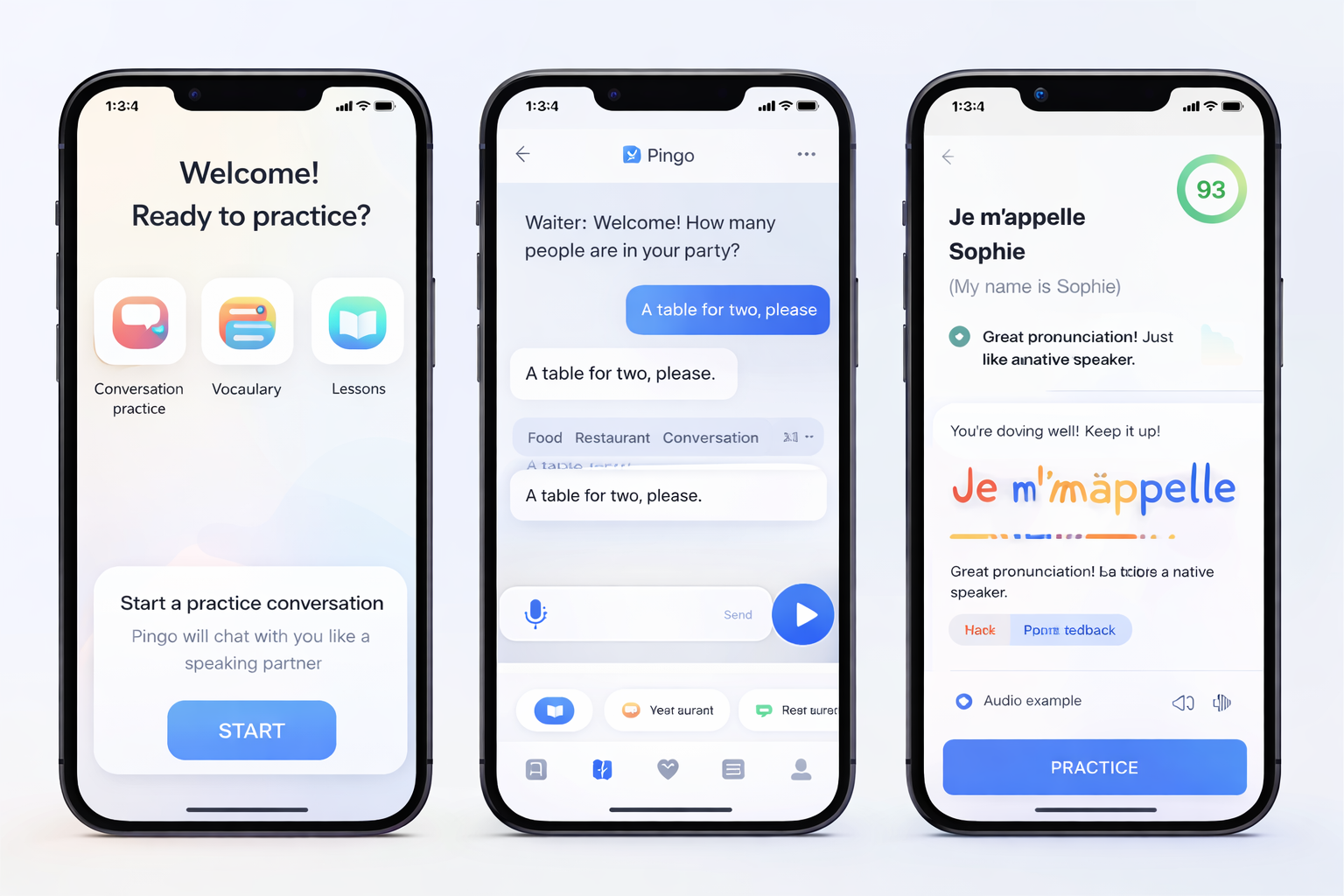
One of the main features of the app is the ability to chat with an AI tutor. Instead of memorizing sentences, users participate in simulated conversations such as:
- ordering food in a restaurant
- asking for directions
- introducing themselves
- discussing hobbies or travel
The AI responds dynamically, allowing the conversation to evolve rather than follow a fixed script.
Pronunciation Feedback
Speech recognition technology allows the platform to evaluate pronunciation. When a user speaks a phrase, the AI analyzes the audio and provides feedback on:
- accent
- clarity
- pronunciation accuracy
This is one of the most valuable features because pronunciation is often difficult to practice without a teacher.
Personalized Learning Paths
AI also tracks progress and adjusts lessons automatically. If a user struggles with certain grammar patterns or vocabulary topics, the system introduces more exercises in those areas.
This personalized approach is designed to make learning faster and more efficient.
Key Features of Pingo AI
While features may evolve as the platform develops, most versions of the app include several core capabilities.
AI-Powered Language Tutor
Instead of static lessons, learners interact with an intelligent assistant that can generate new conversation scenarios.
Real-Time Corrections
The AI can correct grammar mistakes and suggest better phrasing during conversations.
Contextual Vocabulary
Words are introduced within conversations rather than as isolated flashcards.
Mobile-First Learning
Most users access Pingo AI through a mobile interface, making it convenient to practice during short breaks.
Pingo AI vs Traditional Language Apps
AI-based tools are often compared with more established learning platforms.
Here’s a simplified comparison.
| Feature | Pingo AI | Traditional Apps |
|---|---|---|
| AI conversations | Yes | Limited |
| Pronunciation feedback | Yes | Sometimes |
| Adaptive learning | Strong | Moderate |
| Gamification | Limited | Strong |
| Lesson structure | Flexible | Structured |
Apps like Duolingo focus heavily on gamification and structured exercises, while AI platforms emphasize real interaction and personalized learning.
Pingo AI vs Other AI Language Tools
Pingo AI is not the only AI-powered language platform. Several competitors are emerging in the same space.
For example:
- Speak AI focuses on speaking practice and pronunciation.
- Elsa Speak specializes in accent correction.
- TalkPal AI provides conversational AI tutors.
Each platform emphasizes different aspects of language learning.
| Platform | Main Focus |
|---|---|
| Pingo AI | AI conversation tutor |
| Elsa Speak | Pronunciation training |
| TalkPal AI | Dialogue practice |
| Duolingo | Gamified lessons |
As AI technology improves, the differences between these tools will likely become more pronounced.
Benefits of Learning Languages with AI
AI language tutors offer several advantages compared with traditional learning methods.
Unlimited Conversation Practice
Many learners struggle because they lack people to practice speaking with. AI solves this problem by providing a conversation partner at any time.
Instant Feedback
Instead of waiting for a teacher to correct mistakes, AI can analyze speech and grammar immediately.
Adaptive Learning
AI systems track progress and adjust difficulty levels automatically.
Lower Cost
Many AI learning tools are cheaper than hiring private tutors.
Potential Limitations
Despite the advantages, AI language learning is not perfect.
Limited Cultural Context
Human teachers often provide cultural insights that AI may not fully capture.
Conversation Depth
AI conversations may still feel less natural than speaking with real people.
Dependence on Technology
Voice recognition and language models can sometimes misunderstand accents or complex sentences.
Because of these limitations, many experts recommend combining AI tools with other learning methods.
Who Should Use Pingo AI?
Pingo AI may be particularly useful for several groups of learners.
Beginners
AI tutors can help beginners build confidence before speaking with native speakers.
Busy Professionals
Short AI conversations make it easier to practice during breaks or commuting.
Self-Learners
People studying languages independently may benefit from the structured guidance provided by AI.
The Future of AI Language Learning
AI is rapidly changing the way people study languages.
Instead of memorizing grammar rules and vocabulary lists, learners can interact with intelligent systems that simulate real communication.
As large language models continue to improve, AI tutors will likely become more sophisticated, capable of maintaining deeper conversations and providing more accurate feedback.
Apps like Pingo AI represent an early step toward fully personalized language education powered by artificial intelligence.
FAQ
Many AI language apps offer a free version with limited features and a paid subscription for full access.
Available languages depend on the platform version, but popular options typically include English, Spanish, French, and German.
Research suggests that AI tools can significantly improve speaking practice and vocabulary retention when used consistently.
AI can assist with practice and feedback, but human teachers still provide deeper cultural insights and complex explanations.